Table of Contents
Why should I store food?
During a time of the pandemic, soaring inflation, and war in Europe, the answer to this seems to be obvious. The prospect of food insecurity is an ugly thought indeed. The last few years have demonstrated just how fragile the supply chain is.
A deep pantry really is common sense. The United States has been fortunate to have enjoyed a superabundance of food. This is not true for many parts of the world. Things once taken for granted are no longer a sure thing. There are many components of maintaining a pantry to feed your family. The Rule of Three’s states a human being can survive three weeks without food. That may be so but being hungry sucks. In this article, we will address the long-term storage of dry foods.
What are Dry Foods?
Dry foods are just that: Foods that have a very low moisture content. Examples of dry food that can be stored for decades if properly stored are hard white rice, beans, wheat, oats, sugar, salt, and pasta. Low moisture content for storing food long-term is crucial because foods with excess moisture can and will spoil in their containers.
Why should I have dry food in my pantry?
There are a number of reasons to keep dry food in your pantry. They are cheap, nutritious, readily available, and can be stored for years. There are approximately six hundred calories in one pound of hard white rice. There are about sixteen hundred calories in one pound of pinto beans. A large portion of the world’s population subsists on rice and beans because they are cheap, shelf-stable, and provide protein and carbohydrates. This diet may be bland, but it will keep you alive.
Just placed in a food storage container and put on a shelf, dry food has a substantial shelf life but will still eventually go bad. Insect infestation, oxidation, sunlight (UV radiation), and mold all can make food inedible or unpalatable. It makes sense, if you want to extend the shelf life of dry food, you have to avoid, prevent or delay the above factor.
Enter Mylar Bags and Oxygen Absorbers
Mylar is a brand name for what is essentially a plastic or polyester sheet. Mylar bags made and sold for food packaging comply with FDA regulations. Oxygen absorbers are small packs that well, absorb oxygen. When dry food is placed in mylar bags with the correct amount of oxygen absorbers and sealed properly, you have protected the dry food from infestation, oxidation, and moisture.
PRO TIP: It is recommended that mylar bags used for long-term food storage be between five and seven mils thick.
What do I need to store dry food for long-term storage?
This part may seem a little redundant, but for long term dry food storage, here is what you will need:
- Suitable dry food.
- Mylar Bags, suitable for food storage, five to seven mils thick.
- Oxygen Absorbers
- A heat source to seal the mylar bags. You can use a hair straightener or a clothes iron.
- A food-grade container, commonly a food-grade bucket with a lid.
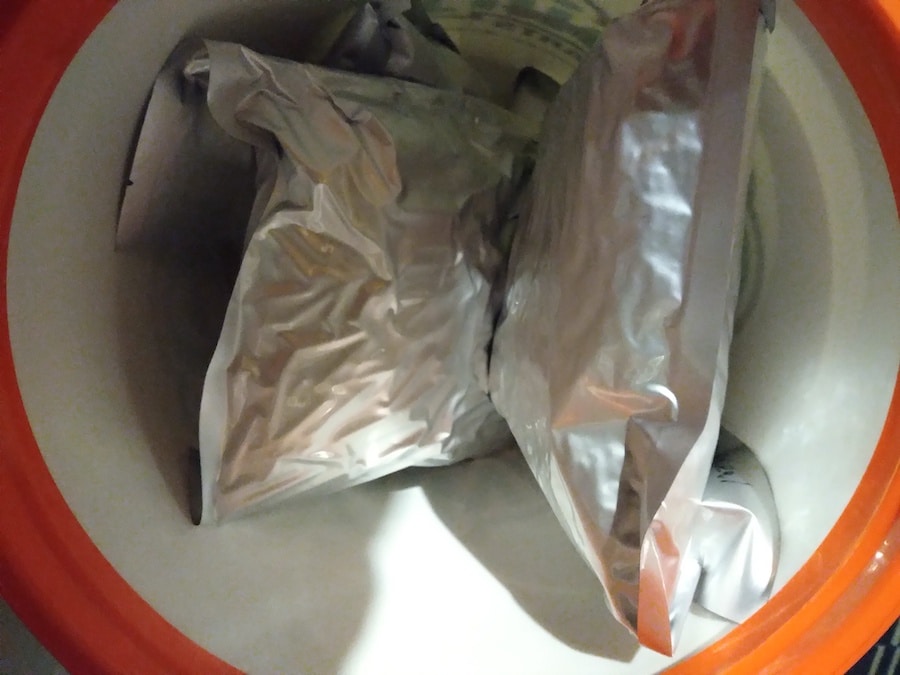
Unfortunately, like everything else, the price of food-grade mylar bags and oxygen absorbers has increased. These have worked well in the past.
PRO TIP: You are purchasing packaging to feed yourself, your family, or others you care about. Purchase it from a reputable manufacturer or distributor. There is a lot of cheap, cut-rate crap put there.
How do I do it?
Very simply, put the dry food into the mylar bags with the appropriate amount of oxygen absorbers and seal using a heat source. As stated above, you can use a clothes iron or hair straightener for this. It is imperative that you use the appropriate quantity of oxygen absorbers with the food and the amount of dry food you are storing. An example of this is for a one-gallon mylar bag, storing rice, it is commonly recommended that a 300cc oxygen absorber can be used. If storing oatmeal, however, it is recommended to use a 500 cc absorber. Many manufacturers include this information with their products. It is also easily found using an internet search.
If you are storing salt or sugar, DO NOT add oxygen absorbers. It is not necessary. If you do so, the salt will be transformed into a salt block. If you do so with sugar, it will taste a bit “off”.
It’s a good idea to put twice the amount of oxygen absorbers as recommended to ensure the oxygen is in fact removed. Oxygen absorbers are relatively cheap. Going hungry is very expensive.
PRO TIP 2: When doing this, the area you are working in should be as clean as possible. You are dealing with food you will eat.
Oxygen absorbers are stored in airtight containers and when you open them, they will start to work. Once you put them in the mylar bag with the dry food, seal them up quickly. Additionally, if you have leftover oxygen absorbers, they can’t be left in the open air and will need to be sealed in an airtight container. A mason jar with a lid and screw on top works well for this.
PRO TIP 3: If an oxygen absorber is soft and pliable, it is still good and ready to use. If it is hard and stiff, it is used up and no longer viable.
Once this is accomplished, after a few hours, the mylar bags may or may not take on a shrink-wrapped look. If not, do not worry. Air or our atmosphere is approximately twenty-one percent oxygen. Oxygen absorbers absorb oxygen, not air. If dry food stored as described above does not appear shrink-wrapped, don’t worry.
A video demonstrating how to do this step by step from my YouTube channel can be seen here.
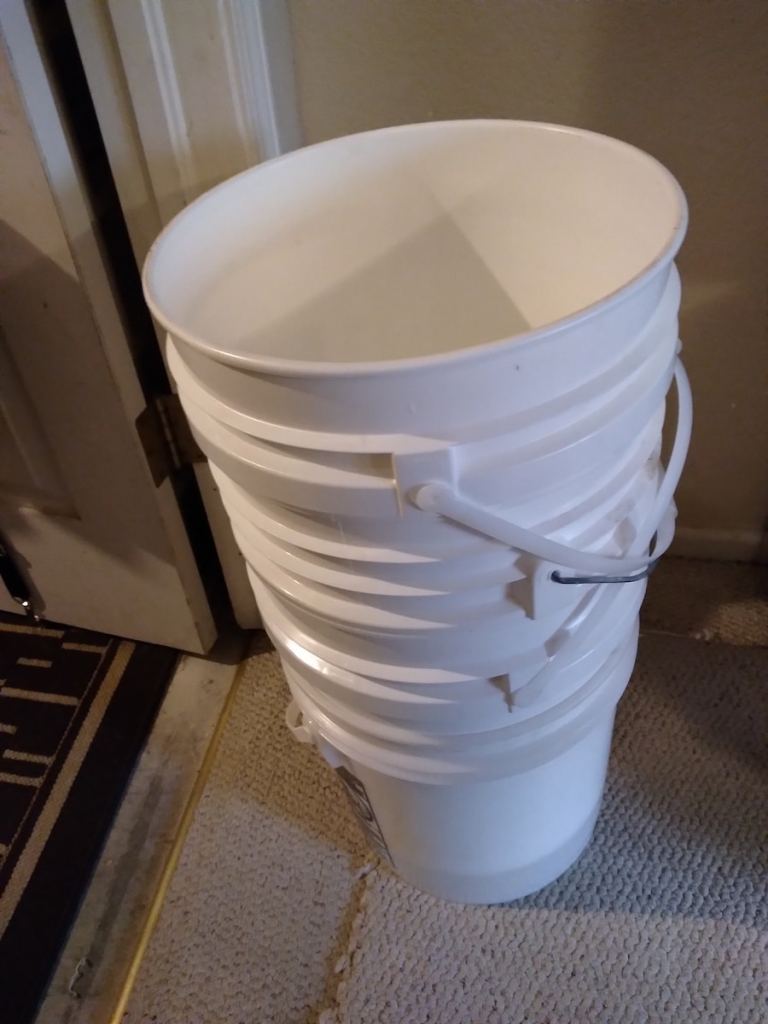
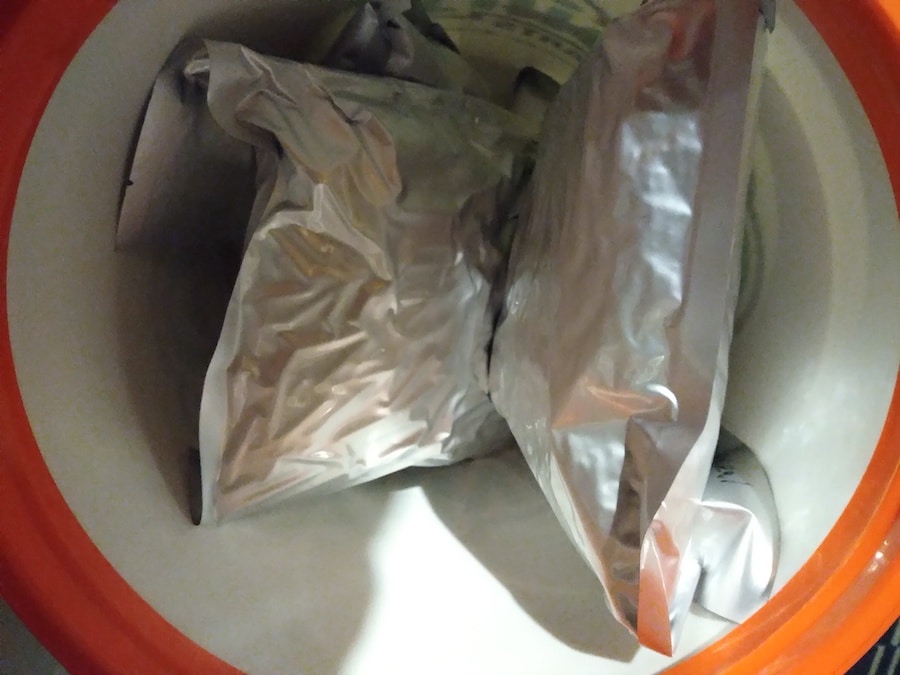
Finally, once dry food has been sealed into food-grade mylar bags, the best practice is to store it in a container, often a food-grade plastic bucket with a lid. The bag purged of oxygen protects the food, and the bucket or other container protects the package. You can go to a deli, sandwich shop, bakery, ice cream, or donut shop near you and offer to buy their food-grade buckets. Often they will give them to you for free as it saves them from having to deal with them further.
How long will dry food stored like this last?
Storing dry food in the manner described above greatly increases the shelf life of dry food. How much? The answer varies greatly depending on the food and the source. Conservatively, dry food stored as described shelf life can be ten years. Other sources indicate that if stored in a dark, cool place, devoid of rodents that could potentially breach a plastic container, the dry food may last as long as thirty years. Your writer has stored, opened, and consumed rice preserved as discussed that was 15 years old. It looked and tasted as if it had been brought home from the store that day.
Why should I do any of this?
Food prices are going up and there is a great deal of uncertainty in the world. The best times to start a food pantry are ten years ago and today. My father grew up during the Great Depression in the United States. He often said a depression happened in this country once and it could happen again. Not to be a fearmonger or Debbie Downer, but it only makes sense to have a pantry of food in troubled times. Dry food stored for long-term use is one component of a well-stocked pantry.